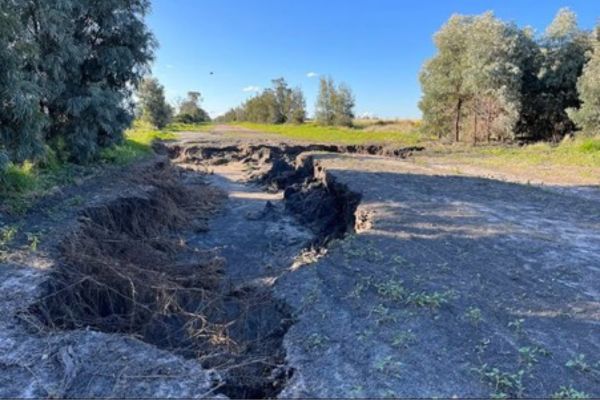
Practical innovations for NSW Councils to integrate climate resilience into local infrastructure.
Across New South Wales, local governments are facing increasing pressure to build infrastructure that can withstand a future shaped by more intense rainfall, rising temperatures, and greater environmental variability. Climate resilience is no longer a specialised add-on for major urban projects, it is now a practical requirement for everyday assets including roads, culverts, stormwater systems, public spaces and community facilities.
At GeoLINK, we work closely with councils, agencies and communities across regional NSW to help deliver infrastructure that performs reliably under both current and future climatic conditions. This article explores practical, cost-effective innovations that councils can integrate into local projects today, strengthening resilience, reducing long-term maintenance and safeguarding community wellbeing.
Designing for a Changing Flood Landscape
Flood behaviour in NSW is changing, with many councils updating their flood studies to incorporate ARR2019, climate-adjusted rainfall, and improved LiDAR. Even small-scale upgrades, such as replacing ageing culverts or improving roadside drainage present opportunities to integrate resilience.
Practical innovations include:
- Increasing hydraulic capacity in culverts where feasible, especially in known bottleneck locations.
- Using multi-cell box culverts to improve flow distribution and reduce scour potential.
- Designing headwalls, aprons and scour protection that anticipate more frequent high-flow events.
- Aligning structures with natural flow paths and avoiding unnecessary realignment of watercourses.
- Applying materials resistant to repeated wetting and drying, reducing long-term deterioration.
These improvements not only mitigate flood risk but also extend asset life and reduce emergency repair costs, which are major concerns for rural councils recovering from multiple flood events.
Nature-Based Solutions for Everyday Infrastructure
Nature-based solutions (NbS) are rapidly transitioning from “best practice” to mainstream infrastructure tools. When incorporated into small and medium-scale projects, they offer cost-effective resilience benefits with strong community and environmental outcomes.
Examples relevant to local infrastructure projects:
- Revegetating road verges and drainage lines with local-provenance species to stabilise soils and reduce erosion.
- Enhancing riparian buffers during minor road or culvert upgrades, improving water quality and habitat connectivity.
- Incorporating natural channel design within culvert barrels to facilitate fish passage and restore natural hydraulics.
- Strategic tree planting along pedestrian routes and community spaces to reduce the urban heat island effect.
These interventions provide dual benefits: they improve the performance of the asset and contribute positive environmental value, aligning with emerging “nature-positive” policy directions across Australia.
Integrating Heat Resilience into Community Infrastructure
Extreme heat poses growing challenges for regional communities, affecting outdoor recreation areas, school facilities, footpaths and public precincts. Many councils are now embedding heat adaptation into their design standards.
Practical options include:
- Shade structures or tree canopies over playgrounds, paths, and seating areas.
- Cool-material pavements that reflect more solar energy and reduce surface temperatures.
- Passive ventilation and shading in new community buildings.
- Water-sensitive landscaping that improves microclimate without high maintenance demands.
These measures enhance public comfort, reduce energy use and create safer community environments, particularly for vulnerable groups.
Smarter Planning Pathways and Early Environmental Advice
Integrating climate resilience begins long before construction. Early planning decisions, particularly for public authority projects under Part 5 (Division 5.1) of the EP&A Act and the State Environmental Planning Policy (Transport and Infrastructure) 2021, can influence environmental outcomes, timeframes and project costs.
Key considerations for councils:
- Identifying flood, biodiversity and heritage constraints early to avoid redesigns.
- Understanding SEPP consultation triggers, such as SES flood-related notifications.
- Obtaining advice on and following the relevant planning approval pathway appropriate to statutory requirements, risk, scale and environmental sensitivity.
- Coordinating ecological, heritage, bushfire and hydrological inputs in an integrated manner rather than separately or sequentially.
Early advice not only streamlines approvals but also ensures that resilience elements are meaningfully integrated, not added as a late design amendment.
Digital Tools and AI for Better Decision-Making
Advances in GIS, LiDAR and AI are unlocking more accurate and efficient environmental assessments. Tools now assist in early constraints mapping, flood risk screening, route selection, erosion prediction and vegetation analysis.
How these tools help:
- Modelling of alternative alignments during concept design.
- Automated slope, flood and vegetation overlays for initial site screening.
- Predictive analysis using historical data plus climate-adjusted scenarios.
- Improved visualisation of flood behaviour and environmental constraints.
These technologies support faster, evidence-based decisions, while still relying on the professional judgement of engineers, planners and scientists.
Building Resilience Through Practical, Place-Based Solutions
As NSW councils navigate a more variable climate, practical resilience measures embedded into everyday infrastructure can deliver outsized benefits. From culvert upgrades and roadside revegetation to shade planning and early environmental advice, councils have opportunities to build safer, more reliable and more sustainable assets.
GeoLINK’s multidisciplinary team continues to support local governments across NSW in delivering infrastructure that is fit for today’s needs and resilient to tomorrow’s challenges.
If your organisation is planning an upgrade, renewal or new infrastructure project and would like guidance on climate-resilient design or environmental approvals, our planning team is here to help.